


Most children can start playing with golf clubs around age 2 or 3, as long as it's play rather than practice. Structured golf lessons usually make more sense around age 5 or 6. That's when most kids have the balance, coordination, and attention span that organized sports need.
The years in between are where parents get stuck. Your toddler keeps grabbing your putter, and you're wondering whether to buy a set, sign up for lessons, or just wait.
This guide walks through what each age can realistically do, what pediatricians recommend, and the signs your child is ready. I'm not a pediatrician or a junior golf coach. Where this guide leans on expert guidance, I link to the source so you can read it yourself.
What can a 2-year-old actually do with a golf club?
A 2-year-old can swing at a soft ball, push a ball toward a target, and copy what they see you do, and that's about it. Balance, attention span, and the ability to track a moving ball are all still developing at this age, according to the American Academy of Pediatrics.
That doesn't make golf pointless at 2. It just changes what “golf” means. The AAP notes that kids under 6 learn best by exploring, experimenting, and copying others. At 2, that looks like:
- Rolling or pushing a ball toward a laundry basket with a putter
- Whacking a big foam ball off the floor
- Copying your swing in slow motion, with no ball at all
- Carrying the club around and “helping” while you practice putting
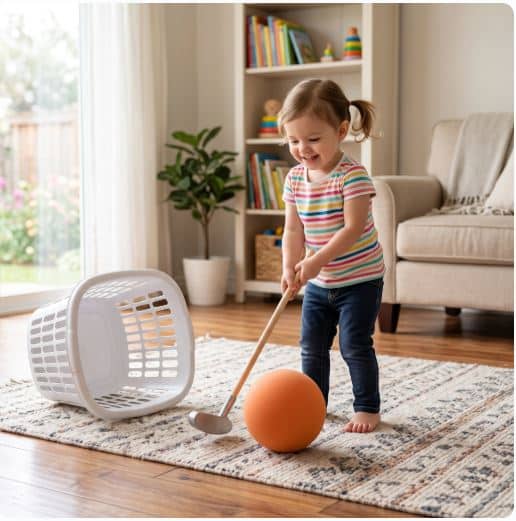
Keep it short. A 2-year-old who plays for three minutes and wanders off had a successful session.
One honest note: many toddler golf sets are labeled for ages 3 and up. If your child is 2, check the age label and the club weight before you buy. A light club and soft balls make more sense than anything that can launch a hard ball across the living room.
What does golf look like for 3- to 5-year-olds?
For 3- to 5-year-olds, golf works best as short games with a simple goal, like hitting a target or getting a ball into a cup. Kids in this range can usually follow one instruction at a time, hold a club with both hands, and enjoy taking turns. They still aren't ready for swing mechanics or long practice sessions.
What changes most from age 2 is that kids start caring about results. A 3-year-old wants to see the ball go in. A 5-year-old may want to count how many tries it took. That's your opening to turn swings into games:
- Target practice: Hit foam balls toward a bucket, a towel, or a cardboard box.
- Putting races: Who gets the ball to the cup first?
- Red light, green light swings: Swing only when you say “green light.”
- Practice-green visits: Many 5-year-olds can handle a short trip to a putting green with an adult right beside them.
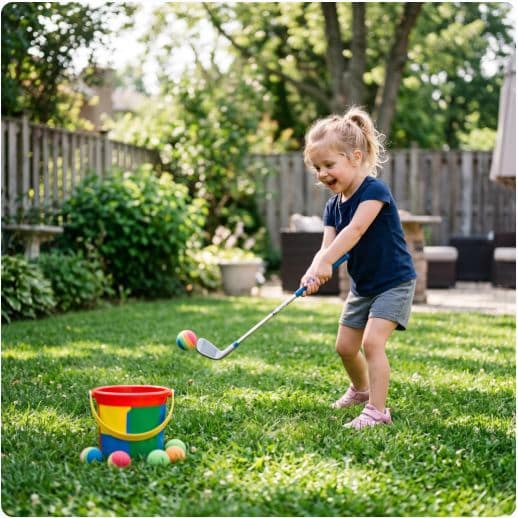
The AAP's sports readiness guidance says activities at this age should focus on basic skills through active play. For golf, that means fun first and technique later.
When is a child ready for real golf lessons?
Most kids are ready for real golf lessons around age 5 or 6. That lines up with the major youth programs. First Tee, the national youth golf organization, serves young people ages 5 to 18, and many local chapters run beginner classes for 5- and 6-year-olds.
Good lessons at this age don't look like adult lessons. Expect short sessions, small groups, and lots of games, with very little talk about swing positions.
If your child is younger than 5 and you want some outside help, call your local course or golf center. Some offer parent-and-child clinics or summer camps for younger kids. Ask how long each session runs and how many kids each coach works with. Shorter sessions with smaller groups usually suit preschoolers better.
What do pediatricians say about starting sports young?
The American Academy of Pediatrics says most children are ready for organized sports at about age 6. Before that, the AAP recommends building basic movement skills like running, throwing, and catching through active play rather than structured training.
Three points from that guidance matter for golf:
- The interest should come from the child. The AAP puts it plainly: interest should start with the child, not the parent. If your toddler keeps reaching for your clubs, that's a great sign. If you're the one pushing, slow down.
- Fun beats winning. The AAP's 2019 clinical report on organized sports stresses enjoyment and development over results.
- Parents can play too. The AAP encourages parents to be role models and join in. For young kids, golf time with you counts more than any lesson.
None of this says golf before 6 is bad. It says golf before 6 should feel like play.
Do kids who start golf early become better golfers?
Starting early doesn't guarantee a better golfer. What it can do is make a child comfortable with a club and give them good memories of the game.
Everyone knows the Tiger Woods story. He showed off his swing on national TV at age 2. But Tiger is famous because he's the exception, not proof that toddler golf makes champions.
The AAP's report on sports specialization points the other way for most kids. It says playing a variety of sports while young builds balance, agility, and coordination that carry over to whatever sport a child picks later. So a 4-year-old who plays golf, kicks a soccer ball, and climbs everything in sight is in great shape.
The realistic goal at this age isn't a future scratch golfer. It's a kid who thinks golf is fun and wants to play with you again next weekend.
What signs show your child is ready to start golf?
The clearest sign is interest: your child asks to play, picks up your clubs, or wants to copy you when you practice. Age matters less than that spark.
Other signs your child is ready for simple golf games:
- They can hold a club with both hands and swing without tipping over.
- They can follow a one-step instruction, like “hit the ball to the bucket.”
- They can wait a few seconds for their turn.
- They already enjoy throwing, kicking, or hitting games.
- They'll stick with an activity for a few minutes before moving on.
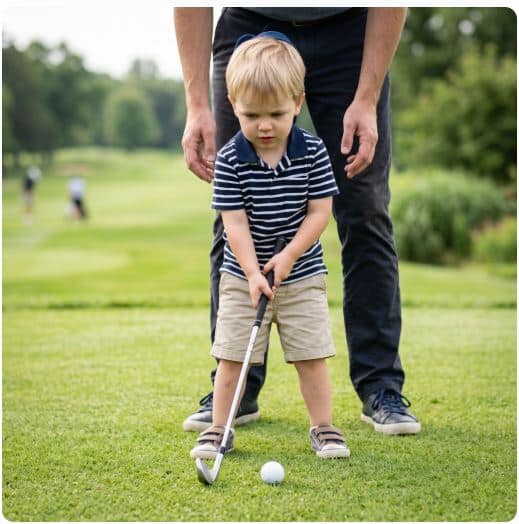
And some signs to wait a bit:
- They get upset every time the ball doesn't go where they want.
- The club becomes something to swing at the dog, the TV, or a sibling.
- They lose interest the moment you set things up.
None of those mean golf is wrong for your child. They mean try again in a few months. Kids change fast at this age.
What equipment does a young child need to start golf?
A young child needs very little to start: one or two light clubs, a few soft balls, and something to aim at. A putter plus one club for hitting off the ground is plenty for a preschooler.
The most important thing is weight and length. Cut-down adult clubs are a common mistake. U.S. Kids Golf was founded after its creator saw his own young sons struggle with junior clubs that were too heavy. The general rule among junior club makers is to fit by height, not age, because two kids the same age can be very different sizes.
For toddlers and preschoolers, options usually fall into two groups:
- Plastic toy sets: Inexpensive and light. They're fine for swinging around the yard, but most aren't built to hit a real golf ball.
- Structured learning sets: More expensive. They're built to hit real balls and often include setup aids or games to help kids learn stance and grip.
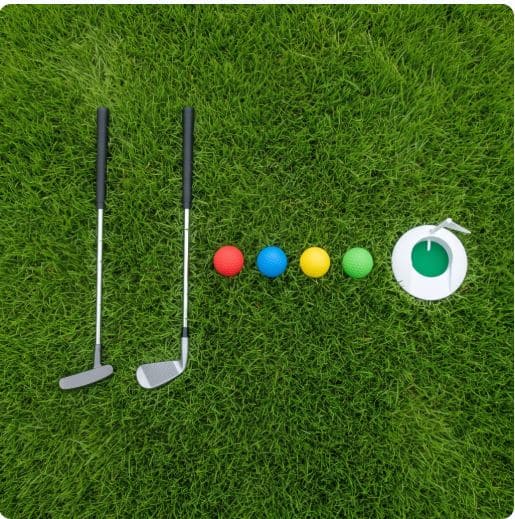
Which makes sense depends on your goal. If you just want an outdoor toy, a plastic set is fine. If you want something that grows with your child as a first step into golf, a structured set may be worth a look. Either way, foam or soft balls are the safer choice indoors.
How do you keep a young child from burning out on golf?
The best way to prevent burnout is to stop each session while your child still wants more. A kid who leaves wanting to come back is a kid who'll ask to play again tomorrow.
A few habits help:
- Let them lead. If they want to putt into a cereal bowl instead of the cup, go with it.
- Skip the corrections. At this age, “Great hit!” teaches more than “Keep your head down.”
- Don't keep score unless they ask. Counting can turn fun into pressure fast.
- Mix it up. Golf one day, a ball game or the playground the next. The AAP's guidance on youth sports specialization favors variety for young kids.
- Play together. Your attention is the real reward. Golf is just the reason to spend the time
And if your kid's enthusiasm has you wanting to sharpen your own game, here's how PG1 works.
FAQ
Q: Can a 2-year-old play golf? A: Yes, as play. A 2-year-old can swing at a soft ball, push a ball toward a target, and copy your swing. Balance and attention span are still developing, so keep it short and fun rather than trying to teach technique.
Q: Is 3 too young for golf lessons? A: Usually, yes, for formal lessons. Most kids are ready for structured lessons around 5 or 6. At 3, simple games at home or a short parent-and-child clinic make more sense than a regular lesson.
Q: What age does First Tee start? A: First Tee serves young people ages 5 to 18. Many local chapters run beginner classes for 5- and 6-year-olds.
Q: Should I buy kids' golf clubs by age or height? A: By height. Junior club makers fit clubs by height because kids the same age can be very different sizes. Avoid cut-down adult clubs, which are usually too heavy.
Q: How long should a toddler practice golf? A: Only as long as they're having fun, which may be just a few minutes. End the session while your child still wants to keep going.
Q: Can toddlers use real golf balls? A: Only outdoors, with clubs built to hit them and plenty of space. Foam or soft balls are the safer choice indoors, especially around siblings and pets.
How old was your child when they first picked up a golf club, and what got them interested? Or if you're still deciding, what's holding you back? Share your story in the comments below. Other parents trying to figure out the right age will appreciate hearing from someone who's been there.