
You followed the reasonable steps. You cancelled, you emailed support, you asked politely for your money back. And now you've got either silence, a canned reply pointing at a terms page, or a flat "all sales are final."
This is the point where most people give up, and the companies that operate this way are counting on exactly that. A $37 charge isn't worth hours of your life — which is precisely why the system is built to cost you hours.
It doesn't have to. There's an escalation path that takes about 30 minutes of total effort, and it works far more often than golfers expect, because the leverage isn't with the company — it's with the payment networks they depend on.
First: Understand Why You Have More Leverage Than You Think
Every business that accepts cards lives under a chargeback ratio. If too high a percentage of their transactions get disputed — commonly around 1% is the danger threshold — their payment processor can raise their rates, hold their funds in reserve, or terminate their ability to accept cards entirely.
That's the real pressure point. A support rep refusing your refund is following a script. A chargeback is a problem their payment processor sees. This is why so many companies that say "no refunds" in email will suddenly refund when a dispute is filed, and why the mere mention of one sometimes unlocks the refund button.
You don't need to be aggressive about this. You just need to actually do it.
Step 1: Send One Final Documented Request
Before disputing, send a single clear email that creates your paper trail. Keep it short and unemotional — the goal is a document a bank will read, not an argument you win.
Include: the charge date and exact amount, the merchant descriptor as it appears on your statement, what you believe you purchased, the date you cancelled (and your screenshot), any guarantee the company advertises, and a specific request — "I am requesting a full refund of $X and confirmation within five business days."
Then add one sentence: "If I don't receive a response, I'll be disputing the charge with my card issuer." That sentence alone resolves a meaningful share of cases, because it moves your email from the complaints pile to the risk pile.
Send it to every support address you can find — the one on the site, the one on your receipt, and any billing-specific address. Reply to the original receipt email too, since that thread is often monitored more closely.
Step 2: Assemble Your Evidence (10 Minutes)
Banks resolve disputes on documentation, not on who's more upset. Collect these before you call:
- The original order confirmation or receipt email
- A screenshot of the checkout page if you can still reach it — especially any pre-checked box or fine print
- Your cancellation confirmation screenshot or email
- Your refund request emails and any replies
- A screenshot of the company's advertised guarantee page, if they have one
- The statement line showing the charge, with the merchant descriptor
Save them in one folder or email them to yourself in a single message. The entire dispute gets easier if everything is in one place.
Note that the company's own advertised guarantee is your strongest single document. If a site publicly advertises a 30-day money-back guarantee and then refuses a refund inside 30 days, that's a straightforward failure to honor stated terms, and it's the easiest kind of dispute for a bank to decide.
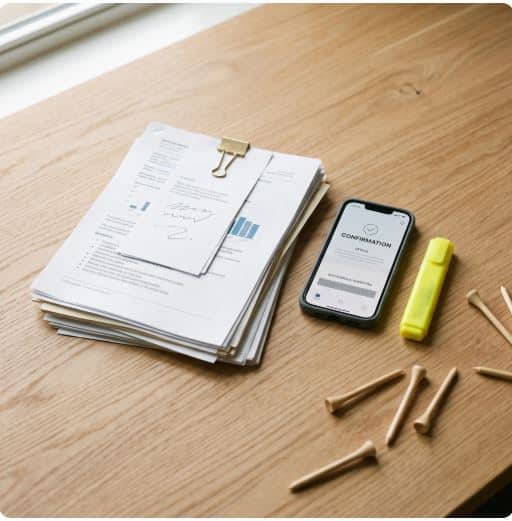
Step 3: File the Chargeback
Call the number on the back of your card or use your issuer's app — most now have dispute buttons built into the transaction detail.
Describe it accurately. For a trial that auto-converted: an unauthorized recurring charge you did not knowingly agree to. For an unhonored guarantee: services or goods not provided as described / merchant failed to honor its stated refund policy. For something never delivered: non-receipt of goods. Accuracy matters because the dispute reason determines which network rules apply.
Ask two things explicitly: that the disputed charge be reversed, and — separately — that future charges from that merchant be blocked. The second one is not automatic and is the step that prevents next month's charge from arriving mid-dispute.
Know your window. Dispute rights are time-limited, commonly 60 to 120 days from the statement date depending on your issuer and card network. Don't let this sit. If the charge has recurred several times, dispute all instances you're still within the window for, not just the most recent.
Most issuers provide a provisional credit while they investigate, so you may see the money back quickly even before the case closes.
Step 4: If the Chargeback Fails or You Paid Another Way
PayPal: Open a dispute in the Resolution Center, and separately cancel the automatic payment agreement under your recurring payments settings. Cancelling on the merchant's site doesn't always terminate the PayPal agreement, which is how people get charged after cancelling.
Debit card: You generally have fewer protections than with a credit card, but most issuers still process disputes under error-resolution rules. File promptly — debit windows can be shorter.
Buy-now-pay-later or third-party processors: Contact that provider's dispute process directly; the merchant may not control the billing at all.
If a chargeback is denied, you can usually request a second review by submitting additional documentation. Denials often come down to the bank seeing the terms you technically agreed to — the counter-argument is that the disclosure wasn't clear and conspicuous, and the checkout screenshot is what demonstrates that.
Step 5: The Regulatory and Public Options
These take longer and rarely recover money by themselves, but they matter — both because they create a record and because companies watching their reputation sometimes resolve cases that reach them.
File with the FTC at reportfraud.ftc.gov. The FTC doesn't resolve individual cases, but patterns of complaints drive enforcement actions against negative-option billing, which is a live area of regulatory attention.
File with your state attorney general's consumer protection division. These offices often do contact businesses on a consumer's behalf, and companies tend to respond to letterhead.
Better Business Bureau complaints carry no legal weight but are visible, and some companies resolve them to protect their rating.
Leave a factual review. Not a rant — a timeline. What you bought, what you were charged, what you asked for, what happened. Factual reviews are the ones future buyers find useful and the ones companies can't easily get removed.
What Doesn't Work (Save Your Energy)
Repeated emails to the same unresponsive address. Arguing with a support rep who has no refund authority. Threatening legal action you won't pursue — companies in this space have heard it thousands of times. Posting angrily on social media without the documentation to back it up.
The leverage is the chargeback. Everything else is supplementary.
Preventing the Next One
Once this is resolved, two habits make you nearly immune: screenshot every order confirmation page at the moment of purchase, and use a virtual card number for any trial offer if your bank provides them, since you can cap or kill that number without touching your real card.
And apply the 90-second checkout scan — scroll the full page, uncheck the pre-ticked boxes, and read what's printed directly beneath the buy button rather than the headline above it.
The Bottom Line
A company refusing your refund by email is not the end of the process — it's the middle of it. Send one documented final request mentioning a dispute, gather six pieces of evidence into one folder, and file the chargeback with an explicit request to block future charges. Watch your 60-to-120-day window, and escalate to the FTC and your state AG if it goes nowhere.
Thirty minutes of calm documentation beats three weeks of frustrated emails, every time.
Have you ever had to fight a golf company for a refund — or had one resolve it the moment you mentioned a chargeback? Share what worked (and what didn't) in the comments, so other golfers know what to expect before they start.
FAQ
What can I do if a golf company won't refund my money? Send one final documented refund request stating that you'll dispute the charge if there's no response in five business days. If they don't resolve it, file a chargeback with your card issuer and separately ask them to block future charges from that merchant. Chargebacks work because excessive dispute ratios threaten a company's ability to accept cards at all.
How long do I have to dispute a golf charge? Commonly 60 to 120 days from the statement date, depending on your card issuer and network, with debit card windows sometimes shorter. If the charge has recurred, dispute every instance still inside your window rather than only the most recent one.
Does mentioning a chargeback actually get refunds? Often, yes. A support refusal follows a script, but a chargeback is visible to the company's payment processor, and high dispute ratios can raise their processing rates or cost them card acceptance entirely. Many companies that say "all sales are final" in email refund as soon as a dispute is filed or credibly threatened.
What evidence do I need for a chargeback? The original receipt, a checkout page screenshot showing any pre-checked boxes or fine print, your cancellation confirmation, your refund request emails and any replies, a screenshot of the company's advertised guarantee, and the statement line with the merchant descriptor. A publicly advertised money-back guarantee that wasn't honored is the single strongest document you can provide.